


_logo%201.svg)


The Age of Brain Rot: What Marketers Don’t Get About the Next Gen

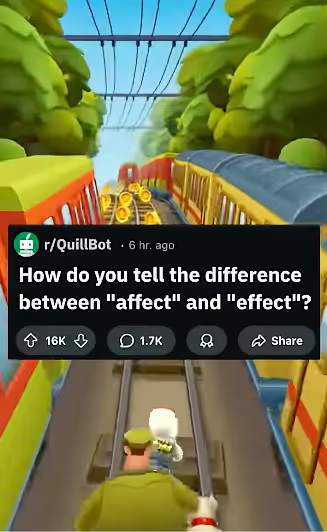
If you’ve been on TikTok (or honestly, anywhere online) this year, you’ve probably stumbled into the so-called “brain rot” era. It’s chaotic, noisy, and a little bit ridiculous: elephants with massive feet speaking italian, endless Subway Surfers gameplay running under unrelated rants, and AI-generated Minions having existential crises.
To most marketers, it looks like kids have completely lost the plot. “Their attention spans are fried! They can’t focus on anything longer than 0.3 seconds!” But here’s the twist: brain rot isn’t a cultural collapse. It’s a cultural remix. And marketers who dismiss it are missing out on how the next gen actually thinks, jokes, and connects.
Welcome to the age of brain rot, where chaos is the canvas, and the kids are painting faster than marketers can keep up.
So, What Exactly Is Brain Rot?

Brain rot began as a joke, a way for young people to describe the feeling of doomscrolling until their brains felt like mush. But in 2025, it’s evolved into something bigger: a style, a cultural movement, almost a genre of its own. The brain rot feed isn’t random at all. It’s carefully layered chaos: sped-up audios, absurd edits, gaming footage, slang that mutates faster than memes can be explained. It’s messy, yes, but it’s also deeply participatory.
What looks meaningless to outsiders is actually a language. Those endless “Ohio memes”? They’re a shared inside joke. The constant layering of background gameplay isn’t just a gimmick; it’s a visual rhythm that makes content feel faster and more addictive. And the AI mashups of SpongeBob, Shrek, and anime characters? They’re part of a remix culture where every piece of media is fair game for parody. Brain rot isn’t nonsense. It’s the new dialect of the internet’s youngest generation.
Why Marketers Keep Missing the Point
Marketers, bless them, often approach brain rot with the wrong lens. They see the chaos and assume the audience is lazy when, in reality, it’s the opposite. A brain rot clip is a puzzle box of references: music, gaming, memes, and slang all jammed into ten seconds. It takes fluency to catch the joke, and kids are fluent in ways adults often aren’t.
The other misstep is polish. Brands still cling to glossy, cinematic ad campaigns, convinced that beauty lies in perfect lighting and smooth editing. But in the brain rot ecosystem, that kind of perfection doesn’t just fail to stand out, it feels fake. A scrappy TikTok edit, thrown together with jump cuts and surreal humour, has a better chance of breaking through than a six-figure studio shoot.
And then there’s the timing problem. By the time a brand finally gets its “Skibidi” parody approved, the internet has already moved on to NPC livestreams or the latest AI meme trend. Brain rot doesn’t wait for your approval process. Its speed is its lifeblood. To play in this arena, brands need to move fast or risk being the cringey uncle showing up late to the party.
The Culture Shift Hiding in Plain Sight
It’s easy to laugh off brain rot as silly, but ignoring it means missing a seismic cultural shift. For one, it’s shaping Gen Alpha’s worldview. If TikTok was Gen Z’s playground, brain rot is where Gen Alpha grew up. This isn’t just content they consume; it’s how they communicate.
It’s also redefining what we think of as attention. Sure, brain rot clips are short, chaotic bursts, but that doesn’t mean kids can’t handle long-form content. They’ll happily binge ten-hour Minecraft streams. What’s changing isn’t the capacity for focus but the rhythm of it. Brain rot is like snacking between meals: quick hits of entertainment that fit into a larger media diet.
Most importantly, brain rot is fuel for creativity. With editing apps and AI tools, anyone can throw their wildest idea into the mix and potentially spark a viral moment. It’s decentralised, unpredictable, and entirely user-driven.
In this new landscape, brands aren’t competing against each other so much as they’re competing against the endless creativity of the crowd.
Surviving the Scroll
The good news? Brands don’t need to make wacky mascots to join in. They just need to rethink how they show up. Instead of pushing polished campaigns that feel untouchable, they can release raw, remixable content that invites participation. Instead of treating slang and memes as afterthoughts, they can invest in cultural fluency, actually understanding the language of the next gen rather than parodying it poorly. And instead of fearing lo-fi, they can embrace it, knowing that imperfection is often what makes content relatable.
Above all, brands need to respect the rhythm. Brain rot content isn’t about following one trend perfectly, it’s about embracing the speed, the humour, and the self-awareness of the culture. It’s about learning to swim in chaos without needing to control every splash.
The Beauty in the Rot
Every time the media shifts, marketers panic. TV was going to kill print. Social media was going to kill TV. Now brain rot is supposedly killing attention spans. But the pattern is always the same: the old guard declares the end of storytelling, while the next generation quietly invents a new version of it.
The future of culture won’t be spotless; it’ll be gloriously messy. At Superminted, we help brands find their rhythm in the noise. Because in the age of brain rot, clarity is a superpower.


.png)
you may also like
Subscribe to get notified when new downloadables drop. Straight to your inbox.
Take it one step further. Book a free consultation with us and let’s talk strategy.
.svg)

