


_logo%201.svg)


Ready, Set, Grow: A Sustainability Workshop

On 25th July, a crowd of 60 stakeholders were in attendance for a sustainability workshop organised by DBS Bank, in conjunction with Republic Polytechnic. Held with the intention to help small and medium enterprises (SMEs) move towards net zero carbon emissions, the workshop focused on the basics of environmental, social, and governance (ESG) issues that influence today’s business landscape.
Designed to address the issue that companies grapple with when it comes to ESG reporting, the workshop served as a starting point by giving SMEs a concise breakdown of the definition of ESG and what exactly ESG is.
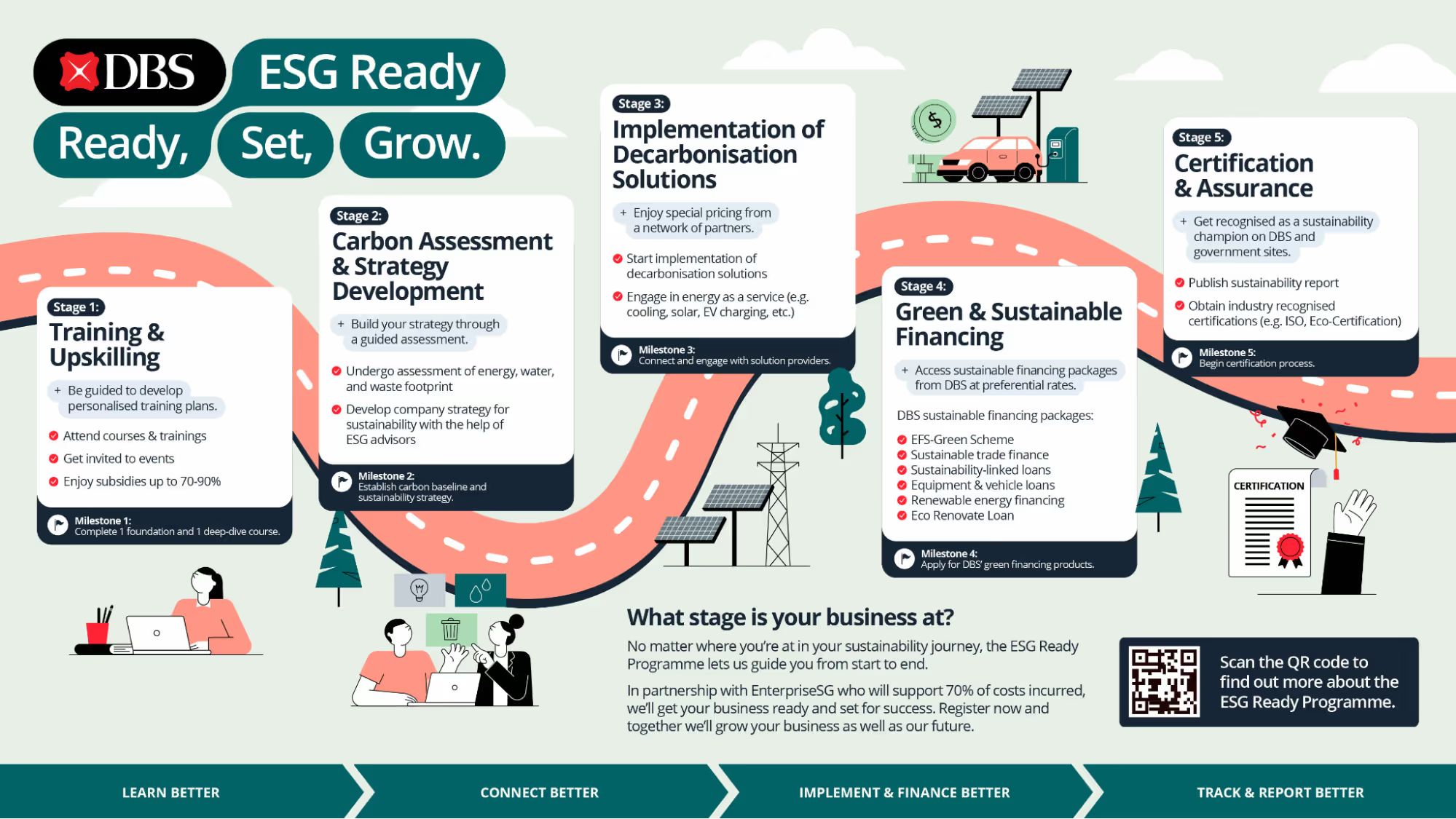
Source: https://www.dbs.com.sg/sme/sustainability/esg-ready-programme
Also in attendance of this workshop were members of the Superminted tribe, eagerly taking notes to further refine strategies for our continuing Sustainability Roadmap. No strangers to the world of sustainability, our brand management agency had already undertaken efforts to educate team members prior to DBS’s workshop. Having gone through two comprehensive and educational workshops on sustainability, we were excited to build upon existing knowledge and reinforce our agency’s commitment to sustainability.
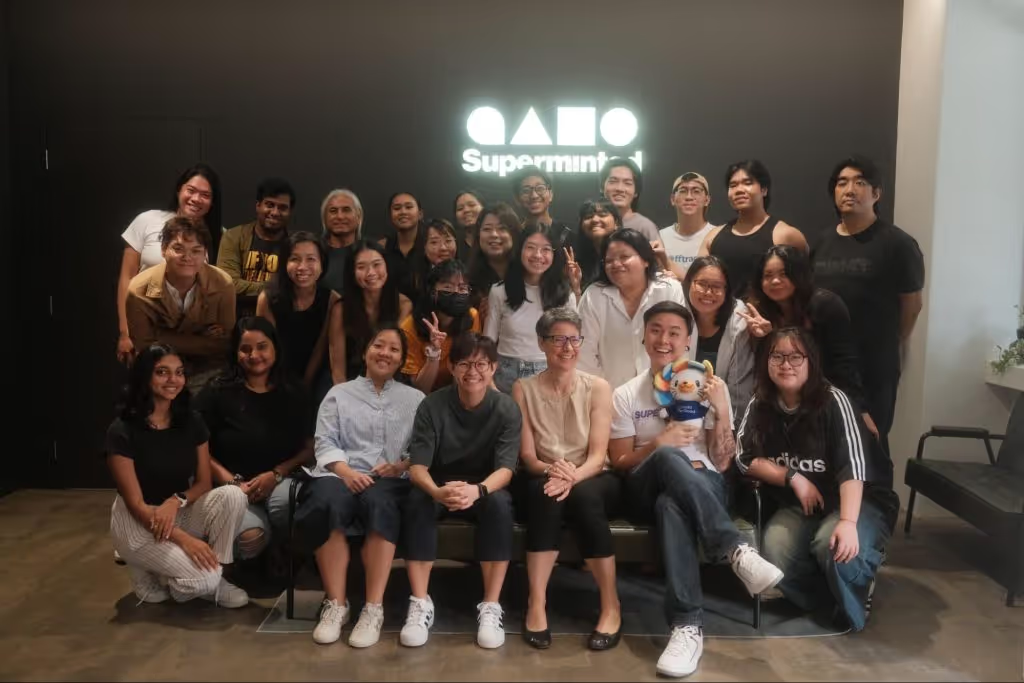
Throwback to our Sustainability 101 workshop, conducted by Miss Anne Langourieux of The Matcha Initiative
Global Trends and Growing Regulations
The main speaker, Republic Polytechnic Deputy Director Song Sin Nee, was the subject matter expert leading the sustainability workshop’s discussions. Supported by team members from various faculties, the hour-long discussion comprehensively covered matters pertaining to ESG and sustainability such as emerging global trends and international regulations. It also touched on ESG matters in Singapore, such as the Singapore Green Plan 2030 – an ambitious nation-wide initiative that seeks to achieve net zero carbon emissions by 2050.
On top of all this, was news that made everyone in the classroom sit up and take notice: Singapore’s new law that required all listed companies to make climate-related disclosures by 2025. These mandatory disclosures will have to follow local reporting standards that are aligned with the International Sustainability Standards Board, a global accounting standards body.
This law requires companies to obtain external limited assurance or independent verification of their scope 1 and scope 2 emissions. Scope 1 refers to a company’s direct emissions as a result of operations (e.g manufacturing facilities or company vehicles) while scope 2 covers indirect carbon emissions generated from the purchase of electricity, steam, heat, or cooling.
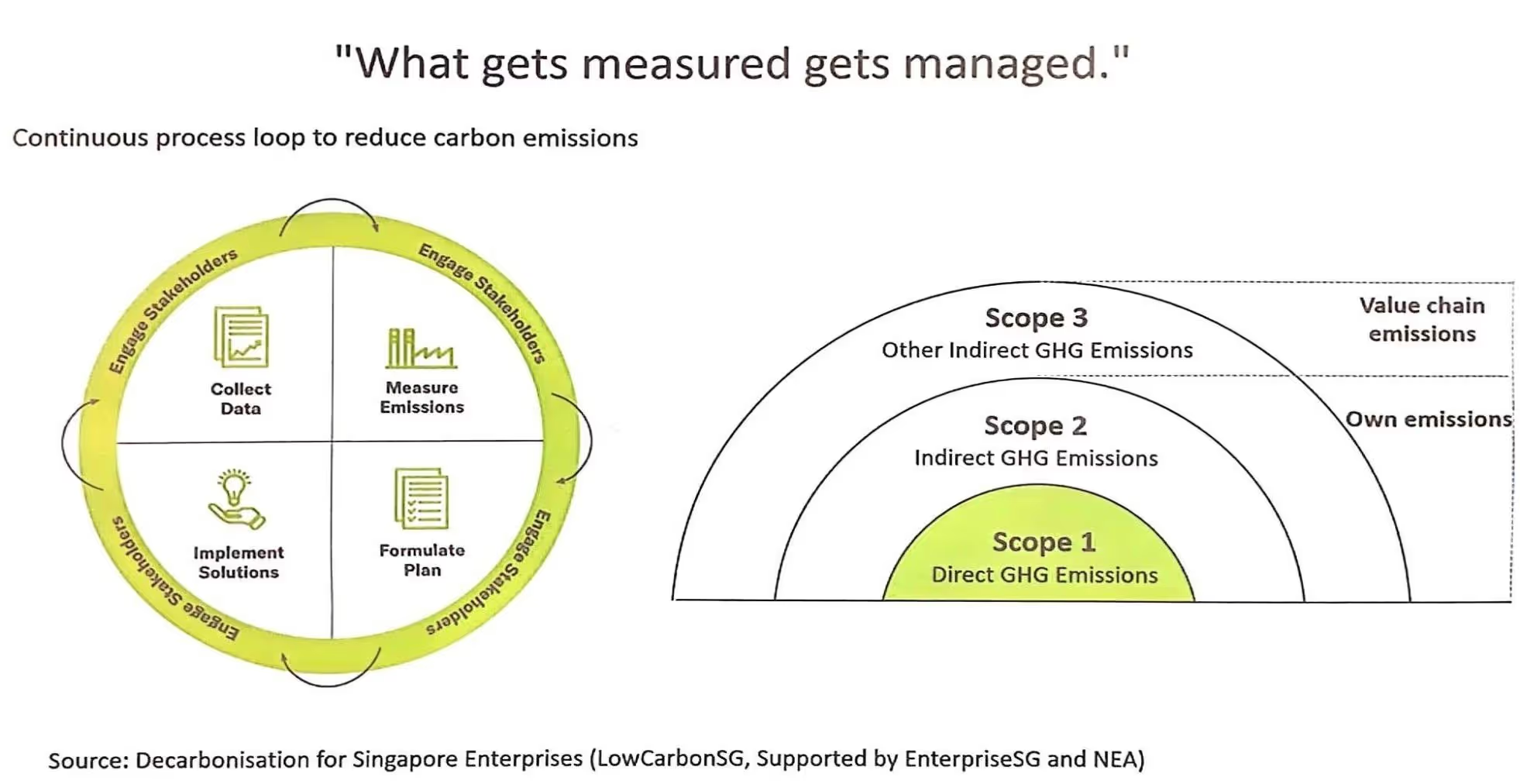
Scope 1-3 definitions, as depicted in the workshop
Serving as a springboard for businesses wanting to get a headstart on these new regulations, the sustainability masterclass sought to help businesses work towards comprehensive ESG and sustainability reporting.
Solutions For Everyday Problems
A recurring message highlighted during the workshop was that sustainability doesn’t simply happen overnight. It begins with tiny efforts that accumulate over time, and through steady constant efforts, organisations can eventually implement sustainability measures that make a positive cumulative impact.
The first step, before arriving at the upcoming emissions reports, is to find small and actionable steps that can be taken to reduce our carbon footprint. These steps were precisely the topics discussed in our breakout sessions.
Logo and Colours
Going back to the heart of what ESG stands for, this particular breakout session focused on how businesses and society as a whole can contribute to the development of a circular economy. It drew from common concepts such as the three R’s (Reuse, Reduce, Recycle) and touched on our collective obsessions with recycling.
But what exactly is a circular economy? Well, according to the United Nations (UN) Economist Network, a circular economy is defined as “a regenerative system in which resource input and waste, emissions, and energy leakages are minimised through long-lasting design, maintenance, repair, reuse, sharing, remanufacturing, refurbishing, and recycling activities”.
A major insight revealed during this breakout session was the need for businesses to prioritise reusing and reducing waste, over recycling.
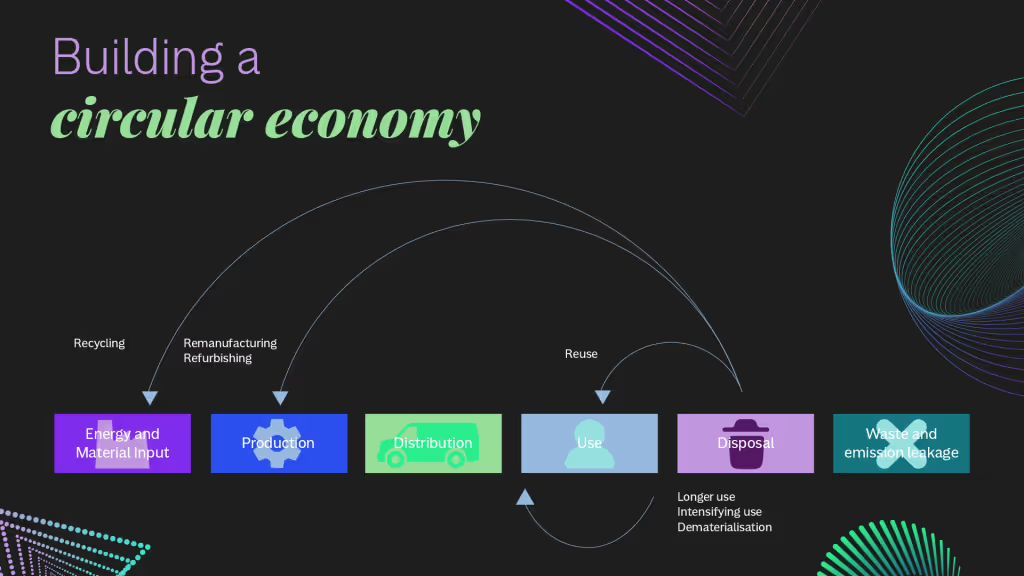
The logic behind this is visually depicted in the graphic above, and demonstrates how recycling still generates a significant carbon footprint in the processing of material input and ensuing production. Conversely, reusing materials and extending the product life cycle of products results in a smaller carbon footprint and has a larger net positive effect on the environment. From this, it is clear to see how establishing a circular economy underpins the progress of ESG and sustainability in Singapore.
Sustainable Packaging
That’s not to say that businesses and individuals alike should stay away from recycling. Far from it, the breakout session went further to outline a silver bullet idea that incorporated the three R’s into one practical solution.
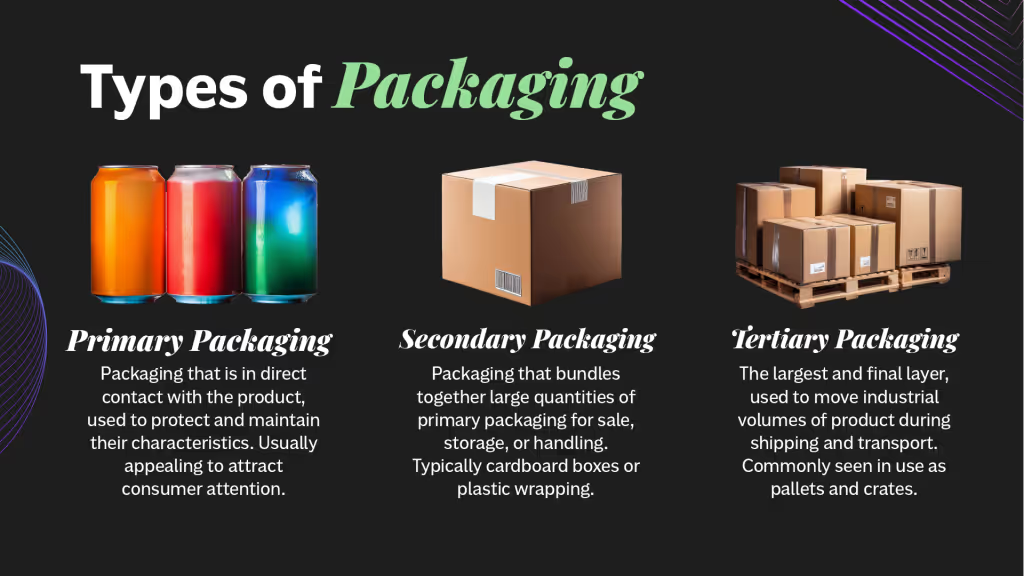
Describing the amount of primary, secondary, and tertiary packaging that goes into shipping and last-mile fulfilment, facilitators of the breakout session introduced prototypes of sustainable packaging made out of recycled agri-waste. Created with the hopes that it would alleviate society’s reliance on single-use packaging such as styrofoam packing peanuts, the prototype checked off all the items on the “reuse, reduce, and recycle” list while solving the pressing matter of rising food wastes.

“Styrofoam” replacements made out of recycled food waste such as coffee grounds. Source: Republic Polytechnic’s LinkedIn Page
For Superminted, the idea of recycled agri-waste turned product packaging is a game-changer. As a brand management agency, the onus is on us as consultants to be responsible stewards and lead the way for a more sustainable marketplace. Empowered with this new information, we immediately began researching how we could incorporate recycled agri-waste as part of future projects to aid our clients in achieving their own ESG goals.
Our Commitment to ESG Reporting and Sustainability
Show, not tell – that’s the premise of effective ESG reporting. If we’ve learnt anything at this workshop, it’s that ESG reporting is most easily achieved when best practices are put into place, to make reporting transparent and heighten accountability.
For sustainability to truly succeed as an ethos in practice, it comes down to our convictions. More than just government initiatives, national goals, or the threat of financial penalties – it’s about what matters to us and whether we want to leave this world better than we found it.
That’s precisely why Superminted’s sustainability efforts exist not as an obligation, but because we believe it’s the right thing to do. Instead of fomenting FOMO, our brand management philosophy is driven by a commitment to helping brands evolve and grow, especially in the realm of ESG and sustainability.
Daryl is a Copy Editor at Superminted, fueled by a love for bringing emotionally engaging stories to life. With carefully selected words and a smart turn of phrase, he is devoted to helping brands shape their unique voice.


.png)
you may also like
Subscribe to get notified when new downloadables drop. Straight to your inbox.
Take it one step further. Book a free consultation with us and let’s talk strategy.
.svg)

