


_logo%201.svg)


Going Fast: How Luxury Car Brands Sell A Lifestyle

Automobiles are going electric, in a trend that surprised no one given the global mandate for sustainability. Critics and pundits worldwide have been demanding the automotive industry decarbonise for the past decade, a cry that has been successfully backed up by sweeping national policies in countries such as Norway, Singapore, and Britain.
In the wake of this historic trend, sales of traditional internal combustion engines are tanking severely. Even mainstay car brands such as BMW are missing profit projections and losing market share rapidly. This dilemma has us wondering, if the state of affordable everyday vehicle brands is already tanking, how is the luxury car industry doing any better?
As a brand management agency, with a couple of self-proclaimed autophiles in our ranks, we decided to put together a little think-piece that further breaks down how luxury car brands stay relevant and desirable. Particularly in a wider automotive industry that shies away from sleek and sexy to focus on lower emissions and sustainability.
Travelling At Different Speeds
Let’s begin by taking a moment to analyse the most evident tactic that luxury car brands use to influence perception. Have you ever noticed the sheer number of marketing campaigns each luxury car brand launches annually? Each luxury car ad campaign is bigger than the last, marked by newer, shinier, and more expensive models that boast 0 to 100 speeds in record time. (If you don’t believe us, check out this press release from BMW that outlines the scope of their 2024 media campaign. It’s wild.)
To the layman, these digital and physical campaigns launched by luxury car brands might just seem like a tactic to sell more products. Much like how a certain tech company with a fruit logo launches new flagship devices yearly, one would assume that these new launches are designed to drive sales. However, compared to their smartphone counterparts – luxury cars aren’t readily available off the shelf. Not everyone can walk into a Ferrari showroom and buy a car off the floor.
Mapping Out The Destination
So, this brings us to the crux of the matter—what are all these marketing campaigns for, if not for driving sales? As with any advertising campaign, the end goal is to sell more than the product itself. Something much bigger and more impactful, with the power to affect emotions and induce behavioural change. Luxury car brands sell a lifestyle – one that’s elevated. This lifestyle becomes a destination for viewers to aspire towards and attain.
Where You’re Going And How You Get There
What are some of the mechanisms that effectively achieve this? After all, there’s already a niche group of people who are interested in cars, but within the luxury car industry, how does each brand set itself apart?
For one, emotional appeals are common tried-and-tested methods. It’s like how in the 70’s people equated smoking with being sophisticated (yes, before all that pesky research about cancer came about). In the same vein, luxury car brands use these campaigns to condition viewers to equate certain emotions and status achievements with their latest two-door sports car, whether that’s a sense of pride, accomplishment, or enlightenment.
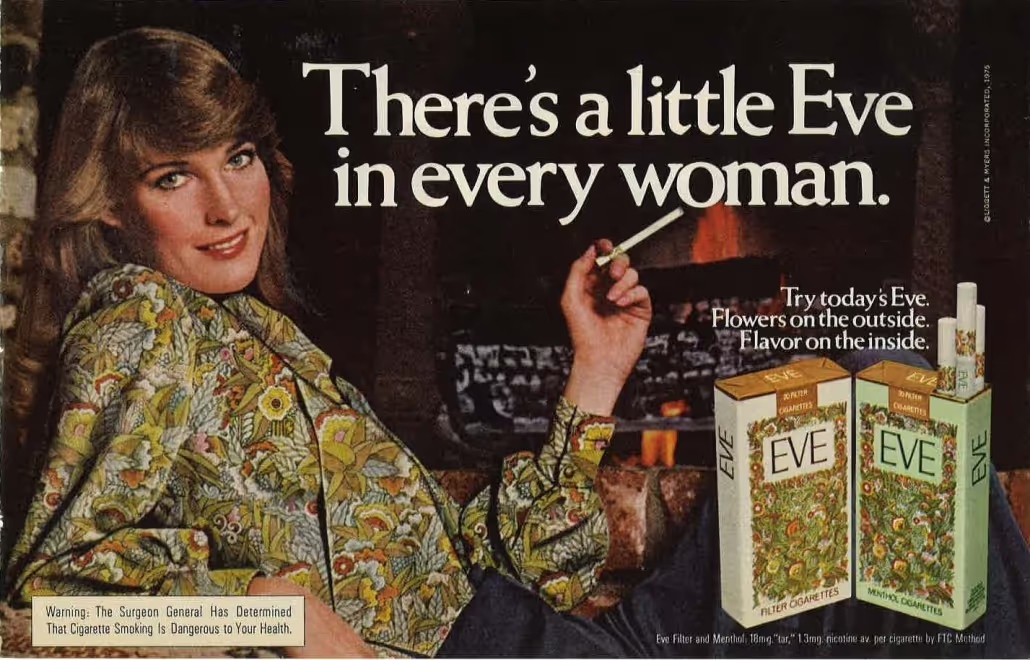
Credits: Cancer History Project
Experience Branding
Another way luxury car brands stand out from the crowd and differentiate themselves is through experience branding. Although to be pedantic, experience branding does in fact refer to the entirety of the customer experience journey and encompasses all touch points – physical and digital.
What luxury car brands do so well, to not only differentiate themselves from their competitors but also to stamp their brand identity in the minds of consumers, is tailored experience branding. Let’s use the example of Rolls-Royce:
From the get-go on their website, Rolls-Royce lets you know how serious they take your purchasing experience. Profiles of their customer-facing staff greet you front and centre, and a core portion of their landing page introduces the idea of personalised financing plans for potential customers. This extends to in-person viewings at their showrooms, where sales staff are all smiles as they escort you through the product line. All the while, they subtly demonstrate how such a purchase could elevate your lifestyle and how it might grant you access to a secret and exclusive level in the video game of life.
The end result is an experience geared towards you – the consumer. You’re made to feel special and psychologically induced into believing that you surely deserve to be a cut above the rest. It reinforces the ideals that you’re worth it, that you’re more than what you are, and that life would be perfect if you had the keys to that new Phantom.
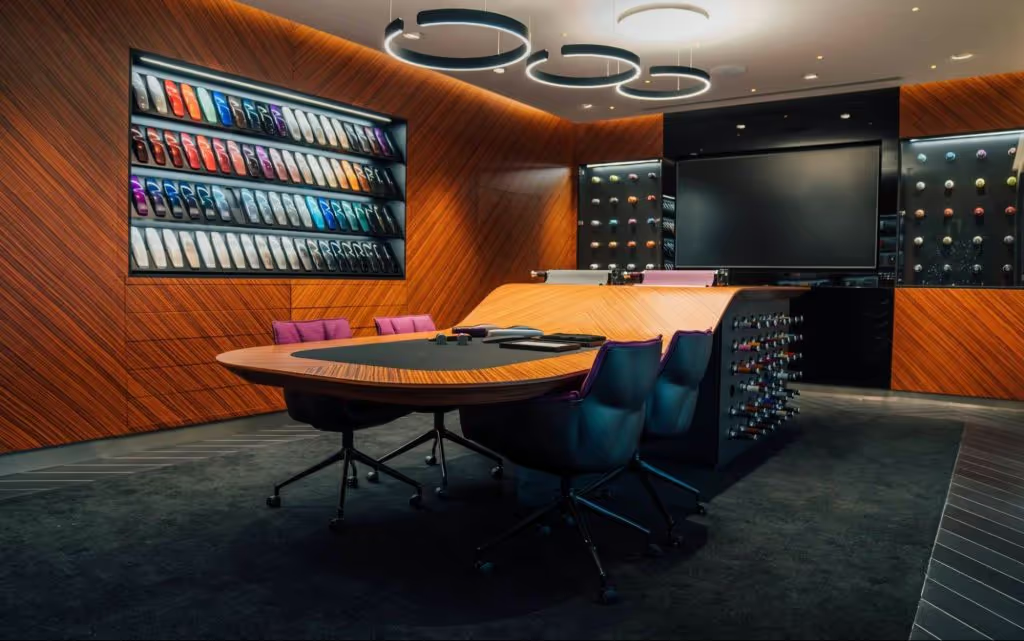
Credits: Rolls-Royce Motor Cars Pressclub
Personalisation, or Lack Thereof?
The other way luxury car brands stand out and appeal to buyers is by gatekeeping. Yes, we know this ideal might seem a little oxymoronic, so let us explain further.
For luxury car brands, the name of the game is exclusivity and uniqueness in their products. They want to sell vehicles that owners can be proud of and use as a flex when they get together for high tea (or whatever it is high-SES people do for fun).
How do they do this? It ranges from giving buyers the opportunity to fully customise their products and create a one-of-a-kind product that resonates with their tastes, to straight-up blacklisting buyers that they feel don’t suit their brand’s image.
Ultimately, these tactics all play to the same goal – they foster a sense of intense pride and ownership for buyers, one that turns them into fanatics and advocates for the brand. And for potential buyers? It represents a threshold for them to cross, a club so exclusive and gated that they would die just to get the keys.
Your Car Is Who You Are
At the end of the day, a car is a representation of you; the car you choose to purchase and drive speaks volumes about your personality. It’s a physical, four-wheeled manifestation of your priorities, interests, and beliefs.
And with luxury cars, it’s often about announcing your presence and making an entrance. While any vehicle can get you from Point A to Point B, in a luxury car you’re doing that in style. It’s a conscious choice to rock up in a Ferrari, knowing that the hallmark sound of its engine and its auditory fingerprint, will immediately grab the attention of those around you.
This isn’t just limited to sports and luxury cars. Ask any mom and dad whose lives revolve around their children, bussing from place to place across weekend commitments of soccer, music lessons, and get-togethers. Chances are they’ll take a minivan over a Porsche 911 any day; at this point it’s no longer a matter of style but functionality and priorities.

Lastly, the underlying message of a brand and the positions they take are a reflection of the users themselves. Consider the car brand Subaru—the car manufacturer was one of the first few to come out in support of the then-fledgling LGBT movement. This support, coupled with the brand’s position as the vehicle of choice for outgoing, adventurous women, made it immensely popular with women who identified with the LGBT movement.
Sit Back And Let Us Take The Wheel
Looking to put the pedal to the metal and accelerate the growth of your brand? Or maybe you’re considering shifting gears to refocus your brand’s identity?
Whatever your goals, you can rest assured because Superminted’s here to help. Drop us a message and let your go-to experts in brand management drive your brand to where it deserves to be.
Daryl is a Copy Editor at Superminted, fueled by a love for bringing emotionally engaging stories to life. With carefully selected words and a smart turn of phrase, he is devoted to helping brands shape their unique voice.


.png)
you may also like
Subscribe to get notified when new downloadables drop. Straight to your inbox.
Take it one step further. Book a free consultation with us and let’s talk strategy.

.svg)

