


_logo%201.svg)


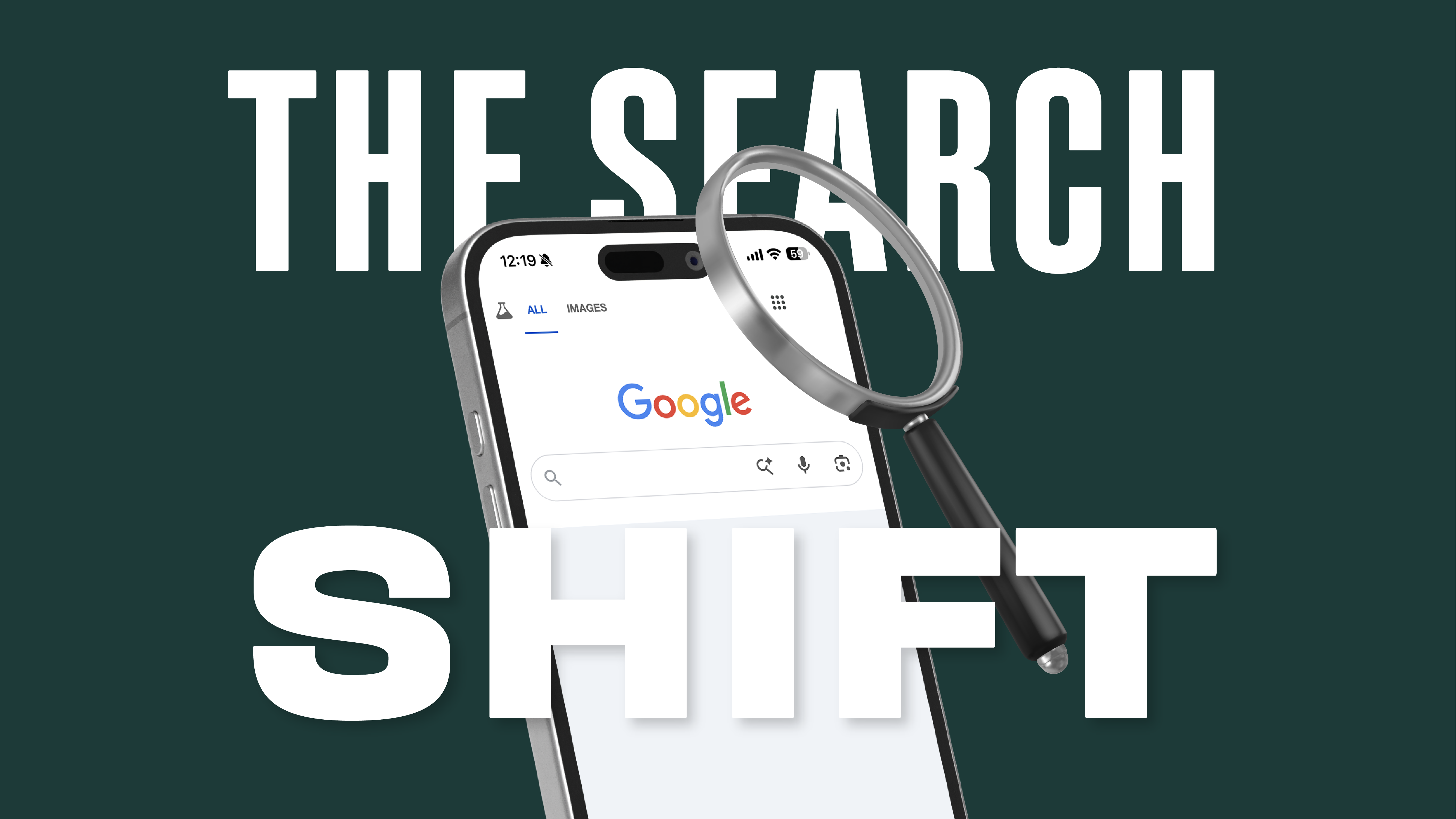
A few years ago, you might have searched Google for “best noise-cancelling headphones". Today, you are more likely to ask ChatGPT, “What are the best noise-cancelling headphones under $300 for travel?”
Instead of scrolling through ten websites, you receive a direct answer.
This shift captures what is happening across the internet. We are moving from searching for information to simply receiving answers. Artificial Intelligence (AI) tools, voice assistants and smart search results now do the heavy lifting, summarising the web in seconds.
But SEO is not dead. It is evolving. Content now needs to work for humans, search engines and AI systems that read, interpret and surface the most useful information instantly.
Search, But Make It AI
Search used to be simple: type a few keywords, hit enter, and scroll through a page of blue links where something might first catch your eye, then tempt you to follow wherever that spark of interest leads.
Not anymore. Search is now conversational, AI-driven, and, some would say, impatient. Instead of browsing websites, people ask full questions and expect answers straight away.
Thanks to tools like Google’s AI Overviews, ChatGPT, Perplexity, Claude, and Gemini, the internet now goes beyond pointing you in the right direction. With time and attention in short supply, it gathers the threads of the interwebs and lays out the story for you. Add voice assistants like Siri and Alexa, and searches start to feel less like keywords and more like conversations.
These systems act as answer engines, scanning the web and distilling the information into one neat response. Which means if your content isn’t clear, structured, and easy for AI to extract, it may never get cited at all.
Say Hello to AEO
Answer Engine Optimisation (AEO) is all about making your content the answer, not just another link. As search engines morph into “answer engines”, users expect quick, clear responses without clicking through a dozen websites.
Imagine someone asking Google:
“How do you keep avocados fresh?”
Instead of showing ten different websites and leaving the user to figure it out, Google might display a featured snippet or AI overview that says something like:
To keep avocados fresh, store them in the fridge once they are ripe. If you have to cut one open, keep the pit in, add a little lemon juice, and wrap it tightly
before refrigerating.
The answer appears instantly. No scrolling. No detective work.
That’s AEO for you. It focuses on the platforms dishing out these instant answers. We’re talking Siri, Alexa and Google Assistant, along with those featured snippets and answer boxes that love stealing the spotlight at the top of search results.
Now, Meet GEO
Generative Engine Optimisation (GEO) is about getting your content featured inside AI-generated answers, not just showing up as another search result.
As search moves beyond ranked results, GEO targets platforms like ChatGPT, Google’s AI Overviews, Gemini, Claude, Perplexity and Bing Chat, which stitch together information from multiple sources into conversational responses.
A user might ask their phone:
“Hey Siri, what’s the best laptop for graphic design?”
Instead of listing product pages, the assistant may read out a summary comparing options, often pulled from buying guides or review sites.
The content that gets selected usually follows a structure such as:
“The best laptops for graphic design typically have high-performance processors, dedicated graphics cards, and colour-accurate displays. Popular options include the Apple MacBook Pro and Dell XPS 15, which both offer strong performance for creative software.”
Success here isn’t just about clicks. It’s about citations.
How Brands Can Keep Up
To succeed in today’s search landscape, where traditional Search Engine Optimisation (SEO), AEO, and GEO all coexist, brands need to rethink how they create and structure content. Here’s a quick guide to crafting content that mirrors real questions, is built for AI to scan, and earns authority through depth and credibility.
Write like people ask questions. Search is now conversational, with most queries written in natural language thanks to voice search and AI prompts. Use headings that mirror real questions and follow them with a clear 40–60 word answer before expanding further.
Design for easy scanning. AI systems don’t read pages like humans. They scan and extract pieces of information. Use clear heading hierarchies, short paragraphs, bullet points, and numbered steps so your content is easy to parse. Adding structured data or schema markup also helps machines understand what your content actually means.
Go deeper to build authority. Short answers get attention, but authority earns citations. Strong content shows expertise through evidence, data, expert insight, and credible sources.
Think beyond keywords. Modern search rewards clarity, context, and trust. The goal isn’t just traffic anymore. It’s being cited as the source.
The Future of Search
Typing keywords and scrolling through a list of links is old news. AI now delivers instant answers, and brands must adapt to search queries that are conversational, contextual and immediate. Here’s a quick guide to aligning your content with how people search, how AI interprets, and how answers are delivered.
Search is conversational. Most queries now sound like real questions, thanks to voice search and AI prompts. Instead of short keywords, people ask full questions. Brands should mirror this behaviour with question-based headings followed by short, direct answers that AI assistants can easily read and extract.
Search is contextual. AI systems do more than match keywords. They analyse relationships between ideas to understand intent. Content, therefore, needs a clear structure, semantic depth, and structured data so machines can interpret it correctly.
Search is immediate. Nearly 60% of searches now end without a click. Winning means becoming the answer itself.
Why It Matters
Search has changed. People are not just looking for links anymore. They want answers.
That is where AEO and GEO come in. When your content clearly explains things and is structured well, AI systems can understand it, surface it and recommend it
with confidence.
So here’s the real question: is your content trying to get noticed or trying to be helpful?
At Superminted, we help brands rethink their content strategy for this new search landscape, combining SEO, AEO and GEO so your brand shows up where it
matters most.
Because the future of search is not just about ranking. It is about being the answer.



Subscribe to get notified when new downloadables drop. Straight to your inbox.
Take it one step further. Book a free consultation with us and let’s talk strategy.

.svg)


